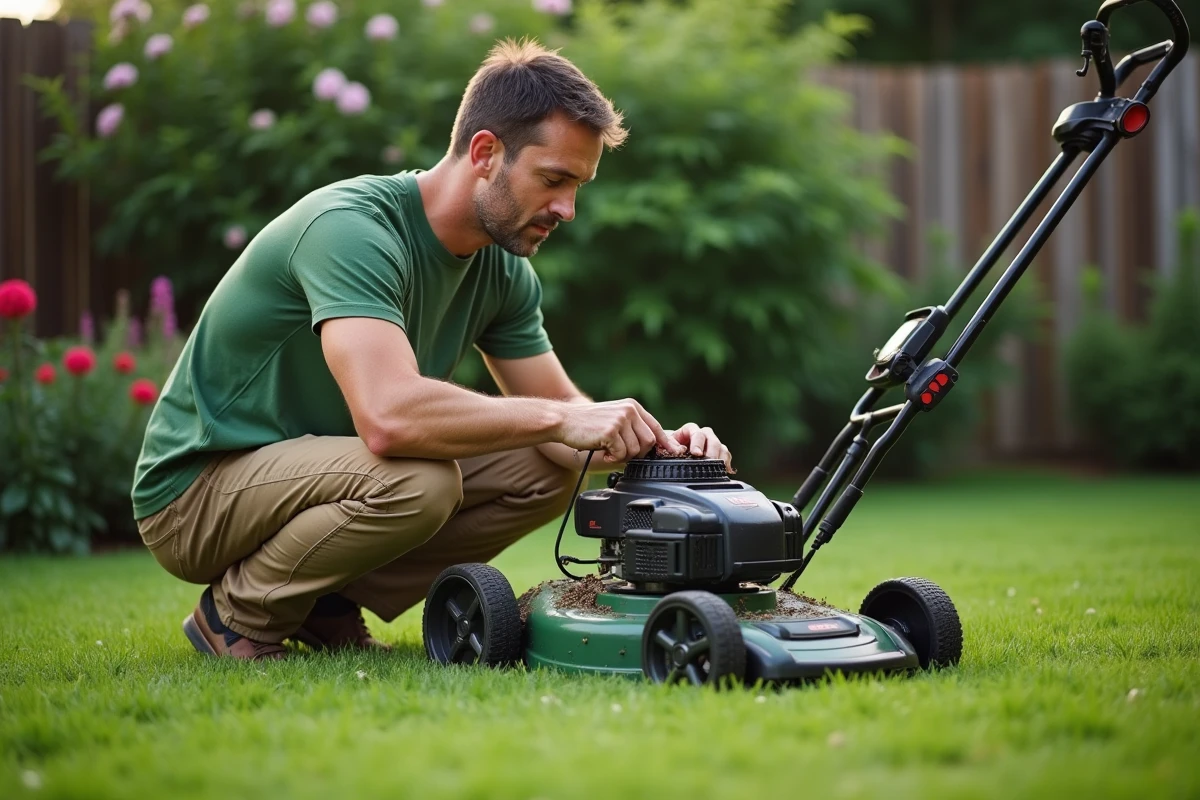
The accumulation of debris under the mower is not a given: it is mainly the result of mindless, repeated actions that eventually jam the mechanics and dull the cut. Mowing a lawn that is too wet or postponing the maintenance of your machine are common habits that, over time, widen the gap between a smooth cut and a sluggish machine. However, there are concrete solutions available for anyone who wants to put an end to grass sticking. It just takes adjusting your actions, choosing the right materials, and tweaking a few settings to regain an effective, durable mower… and a clean lawn.
Why does grass stick under the mower? Understanding the causes to act better
Ultimately, each pass of the mower brings its share of grass stuck under the deck. It is humidity, above all, that turns each cut blade into a compact mass. Whether it’s morning dew or a recent shower, as long as the lawn remains wet, everything clumps together and ends up forming stubborn deposits. These clumps hinder the blade’s rotation, put strain on the motor, and gradually promote rust and the development of fungi. The result: the cut becomes less clean, the lawn tires out, and the device requires more maintenance.
Some details may seem trivial, but they carry weight. Using a dull blade, neglecting to clean the deck, or ignoring the design of the model can really worsen the issue. Sometimes, it’s enough to choose to mow on well-dried grass, maintain the machine, or even select a model designed to limit adhesion.
For those who want to go further, this guide gathers anti-adhesive grass tips for mowers that are tested and practical, with advice to preserve the mechanics and the cut. Anticipating the factors that cause sticking is not just for pros: everyone can take action and achieve lasting results.
What simple tips can prevent grass from accumulating under your mower?
To prevent grass from sticking, you need to stick to a few reliable actions. First, scraping or brushing the underside of the deck carefully after each pass prevents layers from settling and limits the appearance of rust or mold. This reflex takes barely a minute, but it really makes a difference over time.
Another point not to overlook is the mowing frequency. Mowing often, especially when the grass is well dried, facilitates the removal of cut blades and frees up the mechanics. Adjusting the cutting height also helps: higher in summer to retain soil moisture, shorter in spring to encourage regrowth.
It is equally important to ensure that the blade is well sharpened: a clean cut reduces the clumps that accumulate under the deck. Finally, check that the collection bag is not full before continuing; otherwise, the debris will quickly accumulate around the blade and the deck.
Some anti-adhesive products offer a helpful boost. To help you out, here are those that have proven effective:
- A light film of vegetable oil applied to the clean deck helps repel debris
- Silicone sprays or specific anti-adhesive treatments to spray on metal parts
- Renew the application, especially during wet periods, to maintain protection
Adopting these small gestures saves you from long cleaning sessions after each mow and ensures better longevity for the mower.

Practical and natural solutions for worry-free mowing
The choice of mower also weighs in. Electric or robotic models, which are lighter, leave less mark on the lawn and often generate less clumping under the deck in wet weather. More powerful thermal versions require more vigilance to stay clean, especially on compact soils or thick lawns.
In terms of ecological maintenance, mulching is gradually becoming essential. Finely shredded grass returns to the soil, limits the amount of waste to manage, and significantly reduces sticking under the mower. With mulching, the soil recovers nutrients, the machine runs regularly, and the chore of collecting grass diminishes significantly. Some also choose to mow only in sections, promoting biodiversity while reducing pressure on the equipment.
To break the routine, daring a few alternatives changes the game. Replacing part of the lawn with ground covers makes a difference: slower growth, spaced passes, better resistance to climatic fluctuations. On large areas, adding some grazing animals, like sheep, can prove remarkably effective: no more grass to collect, less stress for the mower, and naturally enriched soil.
Caring for the soil often pays off. A good, regular supply of compost or the use of suitable amendments structures the earth, promotes drainage, and makes the lawn less compact. You gain in quality, ease of mowing, and the risk of seeing residues stick diminishes.
Every spring, the lawn awaits its turn. But with these actions in place, the mower glides effortlessly, the deck stays clean, and the satisfaction of a neat lawn shines through. Once you’ve experienced a mowing session without sticking, it’s hard to go back.