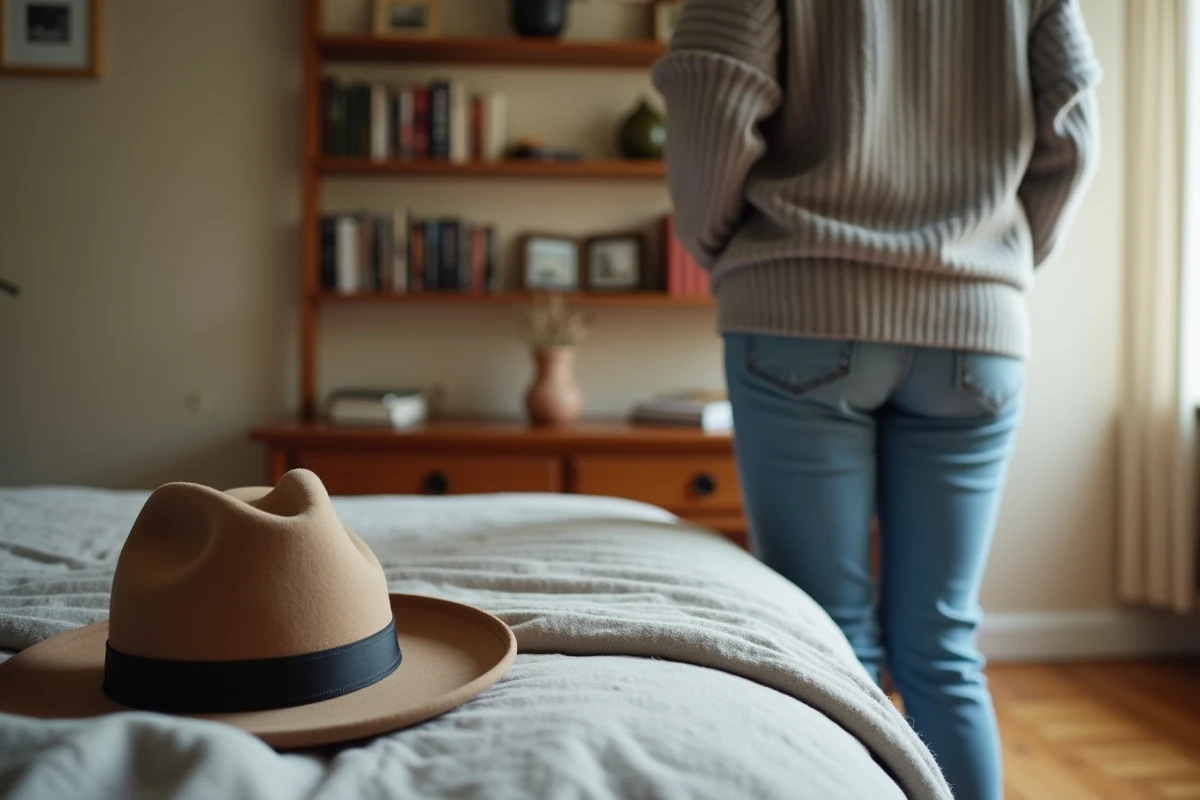
Putting a hat on a bed shouldn’t change anything about the course of a day. Yet, this belief, as subtle as a footprint in the dust, transcends generations and continues to haunt our habits. It can still be found, very much alive, in households where no one really knows where it comes from. An unwritten but feared prohibition, it still shapes the way we place our belongings in the bedroom, as if the shadow of misfortune lurks beneath the duvet.
Why does this superstition fascinate so much, caught between fear and cultural heritage?
It’s impossible to overlook the superstition of the hat on the bed. More than just a story told around a table, it crosses generations, invades our habits, and leaves its mark where we least expect it. Strange paradox: no one really remembers its origin, yet everyone passes it on, sometimes with conviction, sometimes out of mere reflex.
All of this is inscribed in the great book of taboos: bread placed upside down, a horseshoe above the door, the umbrella one refuses to open indoors. Putting a hat on the bed resonates like an old refrain, whether one fears bad luck or prefers to mock it. For some, a simple gesture could attract trouble, illness, or even death. Others see it mainly as the echo of a family rite, a fragment of collective memory that reassures as much as it amuses.
It’s then difficult not to compile a list of these actions that, despite the total absence of reason, continue to rhythm our lives. It’s a whole bouquet of beliefs, shared from person to person: Friday the 13th, a black cat crossing your path, avoiding stepping on manhole covers. There is a bit of control over the unknown, like a fragile barrier against the unpredictable.
These habits also reveal the place of the invisible in our intimate spaces. The bedroom is no longer just private; it becomes the theater of silent prohibitions. Putting a hat on the bed risks breaking a harmony, a balance that past generations worked hard to preserve. Sometimes, history evokes bonfires or a lost scene from classical theater, like the death of Molière or an anecdote about Napoleon. Real facts, exaggerated or invented, it doesn’t matter: the belief remains.
To measure the weight of these still-living customs, here are some superstitions that withstand the test of time and that we regularly encounter:
- Wearing green in the theater: an old fear linked to the death of Molière on stage.
- Changing sheets on Friday: a gesture deliberately avoided in some households.
- Whistling indoors: it is said to invite the devil in.
Resorting to superstition is not just about a fixed tradition: it’s a way to maintain control over what escapes, to weave a link with the past, sometimes to reassure oneself in the face of what reason cannot explain.

Superstition today: simple folklore or a reflection of our modern anxieties?
In a world where information circulates in real-time, putting a hat on the bed escapes theory to become a simple gesture that one avoids without really knowing why. The idea brings a smile, but it reflects a persistent need: to keep small markers when life surprises or wavers. Whether one believes in it or not, many people still refrain, out of habit or loyalty to a superstitious grandmother, from tossing their headgear onto a duvet. As if, unconsciously, this old ritual could ward off a bad turn, a flu, or an unexpected failure.
Psychologists sometimes speak of a self-fulfilling prophecy: fearing bad luck is already opening the door to it. Superstition becomes a refuge, a symbolic barrier against losses and failures. Behind these repeated gestures lies a family memory, fragments of stories passed down without debate, habits formed in childhood, never really questioned yet tenacious.
Literature captures the ambiguity of these beliefs wonderfully. Many novels set the scene where reason no longer holds all the rights, doubt and the supernatural invite themselves through the pages. We encounter superstitious characters who oscillate between fear and a desire to believe in a bit of magic, seeking meaning where chance seems brutal, whether in love, politics, or the poetry of everyday life. It does not disappear; on the contrary, it is inscribed, adapts, and circulates.
Sometimes, it just takes surprising someone, hand trembling, as they remove a hastily placed hat from the corner of a bed. A tiny gesture, an ancient fear, and suddenly, the invisible crosses the room. As if, from the shadows, superstition always finds a way to slip into our modern lives.