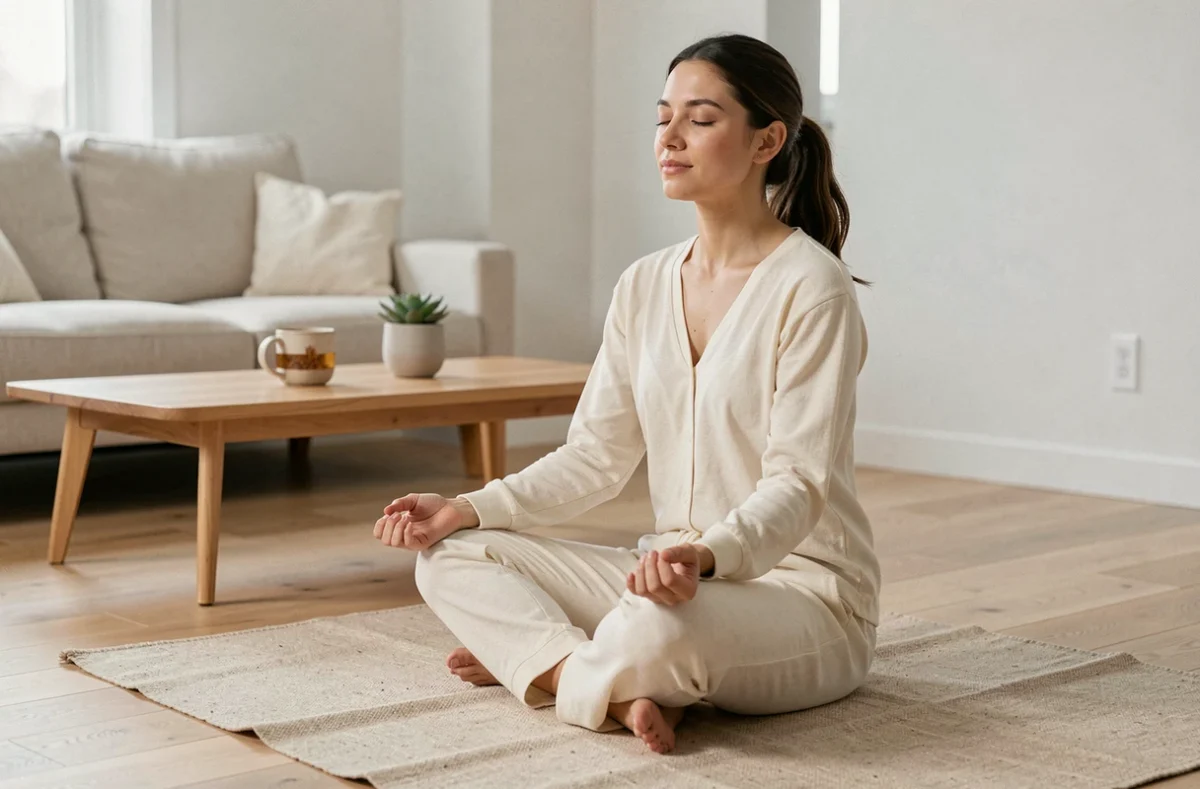
Everyday well-being means maintaining a balance between physical and mental health through regular actions, without needing a radical transformation. It rests on two key principles: consistency (which helps habits take root) and adapting those habits to each person (which makes them sustainable). Looking after your body and mind depends less on occasional efforts than on small adjustments repeated day after day.
Sedentary behavior and movement: why moving isn’t always enough
Regular physical activity is often presented as the cornerstone of well-being. But breaking up long periods of sitting matters just as much as exercise itself. Public health guidelines clearly distinguish between two goals: increasing the time spent being active and reducing the time spent inactive.
In practice, someone who runs three times a week but sits at a desk for eight hours straight still faces a risk factor associated with sedentary behavior. Getting up to walk for a few minutes, changing position or simply standing can help break this cycle.
Exploring well-being at Soins, Beauté & Sante can help you discover complementary practices that go beyond exercise alone, incorporating body care and rituals suited to every lifestyle.
Anti-sedentary habits to build into your day
- Set an hourly reminder to get up and walk for two to three minutes, even if it’s just along a hallway or around your desk.
- Take the stairs whenever possible, even for short trips between floors.
- Move your joints (ankles, wrists, neck) in gentle circles, staying seated if necessary.
The goal isn’t athletic performance. Regular micro-movements can be just as protective as structured exercise.

Social connection and mental well-being: an often-overlooked habit
Well-being isn’t limited to what we do on our own. Social interactions, even brief ones, have a measurable impact on mental balance. Maintaining a relationship, checking in on someone close to you or taking part in a shared activity are all forms of self-care.
One distinction is worth making: social isolation and loneliness are not the same thing. Isolation refers to an objective lack of contact. Loneliness, on the other hand, is a subjective feeling. You can be surrounded by people and still feel lonely, or have few relationships without feeling that anything is missing.
This distinction changes how we approach the issue. Going out more often doesn’t necessarily ease loneliness. By contrast, deepening a single trusting relationship may be enough to strengthen your sense of emotional security.
Practical ways to nurture social connections
Sending a message to someone you’re thinking of, without waiting for a special occasion, is a small but effective gesture. Joining a group class (sports, cooking, language) provides a regular setting that makes it easier to connect without pressure. Social bonds grow through repeated small acts of care, not exceptional events.
Breathing and stress management: a tool you can use anywhere
Mindful breathing is one of the simplest ways to manage everyday stress. It works by activating the parasympathetic nervous system, which slows the heart rate and eases muscle tension.
A few slow breaths, letting the air fill your belly first and then your chest, are enough to produce a real physiological effect. You can take these pauses anywhere: before a meeting, on public transport, while waiting or just before bed.
Unlike other relaxation techniques, mindful breathing requires no equipment or preparation. You don’t need a quiet place or dedicated time. Three to five deep breaths can have a measurable effect on nervous tension.

Adapt your well-being habits instead of copying a one-size-fits-all routine
Well-being guides often offer the same lists: get up early, drink lemon water, meditate for ten minutes. These suggestions aren’t inherently bad, but they can fall flat when they don’t suit someone’s schedule, circumstances or preferences.
Health authority recommendations emphasize making gradual changes and choosing activities that suit each individual. A night-shift worker doesn’t have the same opportunities to rest as an office worker. A single parent doesn’t have the same amount of free time as someone living alone without children.
Build a daily routine that works for you
- Choose just one new habit to add each week instead of changing everything at once. Taking on too many new habits can lead to giving up.
- Look for existing moments in your day (your commute, lunch break or bedtime) to add a ritual, rather than creating extra time for it.
- After two weeks, consider whether the habit is making a noticeable difference. If not, replace it without feeling guilty.
- Accept that some weeks will be less consistent. Staying on track over several months matters more than being perfect every day.
A habit you stick with for six months is worth more than ten resolutions abandoned in January. Everyday well-being is built up gradually, not through occasional bursts of willpower.
The final point to keep in mind is the collective dimension. Mental well-being is now part of public health prevention efforts, which means more resources are becoming available: helplines, local programs and group workshops. Individual actions are more effective when they’re supported by the environment around us.