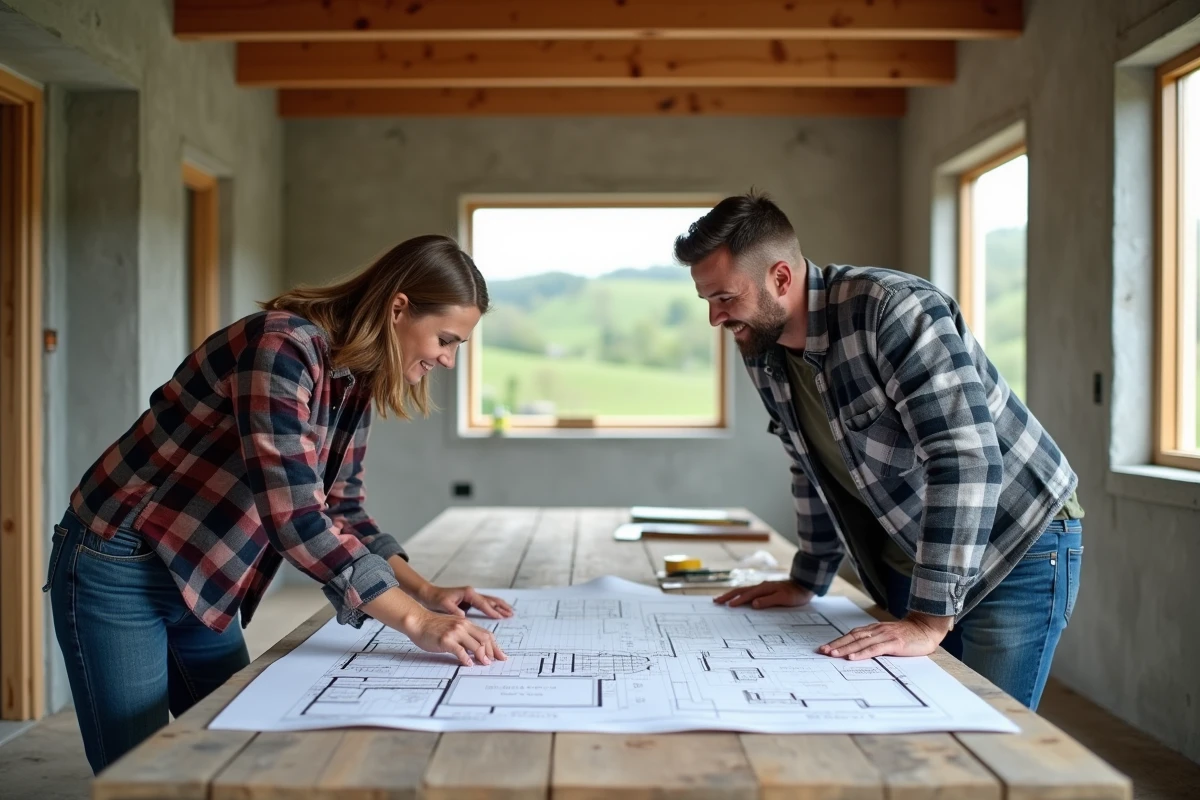
Building the house of your dreams relies on technical and financial decisions whose impact is measured over several decades. Between the choice of land, construction materials, and the chosen construction method, each decision affects the final cost, thermal comfort, and resale value of the home. Which expense categories really create the gap between two comparable construction projects?
Expense category and relative weight in a construction project
The distribution of the budget among the major categories of a new house varies according to the construction method, the region, and the level of finish. The table below summarizes the typical orders of magnitude observed by industry professionals.
| Category | Estimated share of the total budget | Main variable |
|---|---|---|
| Land (purchase + notary fees) | About one third | Location, development |
| Structural work (foundations, walls, roof) | About one quarter to one third | Materials, architectural complexity |
| Finishing work (insulation, plumbing, electricity) | About one fifth | Thermal standards, quality of equipment |
| Finishes and exterior arrangements | The remaining balance | Range of materials, size of rooms |
The land remains the most difficult category to compress. For the same surface area, a plot already serviced in a suburban area costs significantly less than a plot in the city center, but connection fees for an isolated plot can rebalance the gap.
The structural work, on the other hand, directly depends on the choice of materials. A wooden frame reduces construction time compared to traditional masonry, which impacts labor costs without necessarily lowering the price per square meter of the materials themselves.
Buildable land: what really affects the price
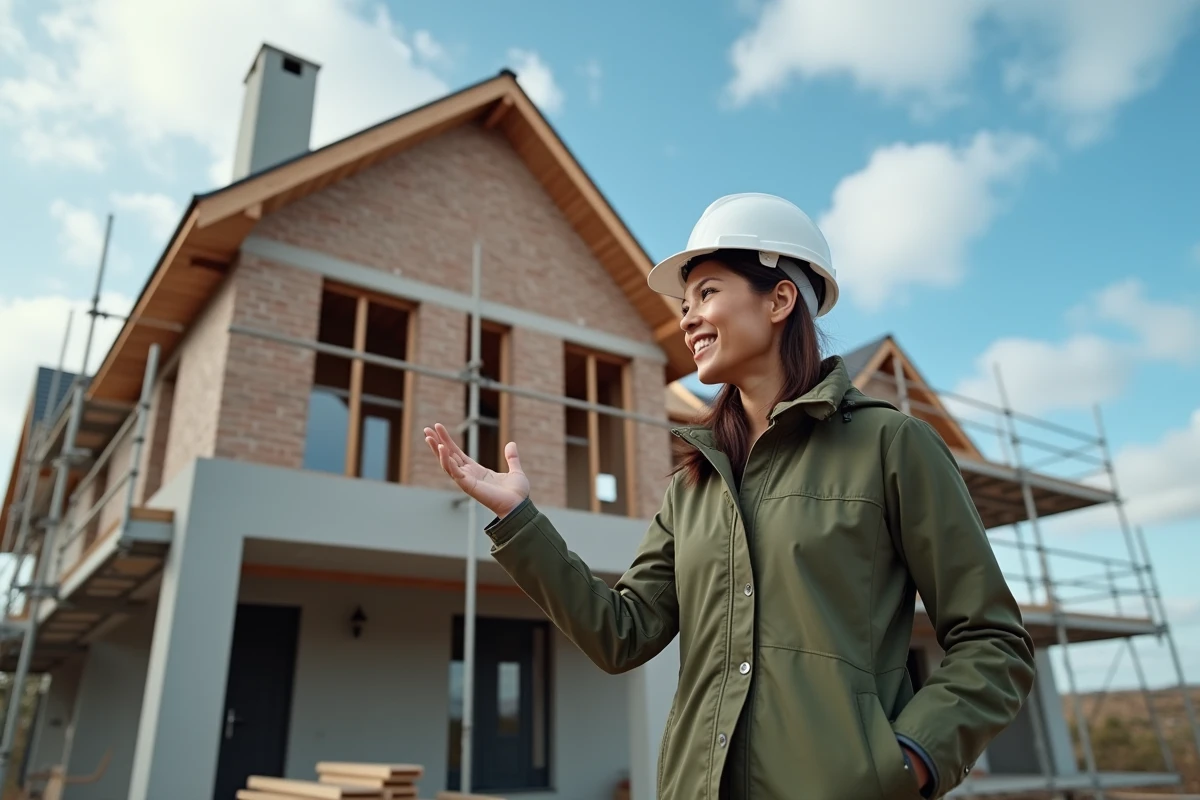
Even before drawing plans, the land determines the feasibility of the project. Clay or sloped soil requires special foundations that increase the cost of structural work. The geotechnical soil study is mandatory since the ELAN law for the sale of land in areas at risk of clay shrink-swell.
Contacting Concept Maison as early as the land search phase allows for assessing the actual buildability of a plot before signing a preliminary agreement.
The local urban planning plan (PLU) sets constraints that are often underestimated: maximum height, ground footprint coefficient, distance from property boundaries. Checking these rules before purchase avoids having to reduce the living area or the number of planned rooms.
- Request the operational urban planning certificate from the town hall to confirm the feasibility of the project on the targeted plot.
- Check the connection to networks (water, electricity, sanitation) and estimate the cost of development if the land is not serviced.
- Consult the natural risk prevention plan to anticipate additional foundation or insurance costs.
Materials and construction method: the decision that weighs the longest
The choice of materials is not limited to the purchase price. The overall cost includes lifespan, maintenance, and thermal performance over several decades. A standard concrete block has a lower price per square meter than monomur brick, but the latter offers better insulation without interior cladding, which reduces wall thickness and frees up living space.
The wooden frame is appealing for its quick implementation and more favorable carbon footprint. However, it requires rigorous air-tightness treatment and protection against moisture, two points that, if poorly managed, lead to costly pathologies to correct.
Cellular concrete represents an interesting compromise: lightweight, insulating, and easy to cut, it is suitable for custom homes with atypical architectural shapes. Its limitation remains its mechanical resistance, which is lower than that of traditional concrete for multi-story constructions.

Insulation and thermal regulation
The current environmental regulations impose energy performance thresholds that guide the choice of insulation and heating systems. Exceeding regulatory thresholds reduces energy bills and improves the energy performance diagnosis rating, a criterion increasingly scrutinized upon resale.
External insulation eliminates most thermal bridges, but it increases the renovation budget compared to traditional internal insulation. In a new construction project, integrating this option from the design phase is cheaper than adding it later.
Architect or builder: two management logics for the site
An architect designs a custom project, adapted to the land and the occupants’ lifestyle. Hiring an architect is mandatory beyond a certain floor area. Their involvement allows for greater customization of rooms, volumes, and orientation, but it requires more active site monitoring from the project owner.
A builder of individual houses works with a construction contract (CCMI), which includes a guarantee of delivery at agreed price and time. The CCMI protects against budget overruns and company failures during construction.
- The architect offers maximum design freedom, but the final budget depends on the quality of the artisans’ supervision.
- The builder guarantees a fixed price and delivery assurance, with customization limited to their catalog.
- An independent project manager sits between the two: they coordinate the work without offering the delivery guarantee intrinsic to the CCMI.
The choice depends on the desired level of customization and the project holder’s ability to manage the uncertainties of the site. For a house with land constraints or an atypical plan, the architect provides a technical value that is hard to replace. For a standard project on flat land, the builder offers a more secure contractual framework.
Building your house remains a project where every technical decision permanently alters the quality of life and the value of the home. The land and construction method concentrate the majority of cost differences between two projects of comparable size. Securing these two categories upfront, with the right contacts, is crucial for the success of the entire project.