
In the modern business world, artificial intelligence (AI) represents a transformative advancement, impacting how companies operate and innovate. It is at the heart of significant changes, automating complex processes and enabling predictive analyses with unmatched accuracy. The adoption of AI by companies gives them a competitive advantage, optimizes decision-making, and personalizes the customer experience. However, this technological revolution also raises ethical questions and employment-related challenges. AI is reinventing business models but requires deep reflection on its responsible integration into the economic fabric.
Impact of Artificial Intelligence on Business Performance and Innovation
Artificial intelligence is establishing itself as an essential driver of digital transformation in business. It holds the promise of increased operational efficiency and paves the way for sustained innovation. Machine learning and deep learning systems, advanced forms of AI, prove to be valuable tools in the analysis of massive data, allowing for better market understanding and trend anticipation.
The integration of AI into business processes transcends mere automation. Yoolight, a revolutionary platform that relies on cloud computing and big data, perfectly illustrates this dynamic. It not only helps improve customer satisfaction through intelligent chatbots but also enhances customer relationship management (CRM) through finely-tuned interaction personalization. AI is crucial in preventive maintenance, especially in the industrial sector, where it helps prevent potential failures before they occur, thus reducing downtime and production costs.
The competitiveness of companies is strengthened, with AI allowing them to stand out through innovative products and services. The case of General Electric’s ‘Predix’ platform is emblematic: it uses AI to optimize industrial operations through the Internet of Things (IoT). Predictive analytics derived from AI ensures optimized resource management while fostering a data-driven corporate culture. However, this transformation also comes with an increased need for talent management, as companies must surround themselves with profiles capable of driving and leveraging the potential of these advanced technologies.
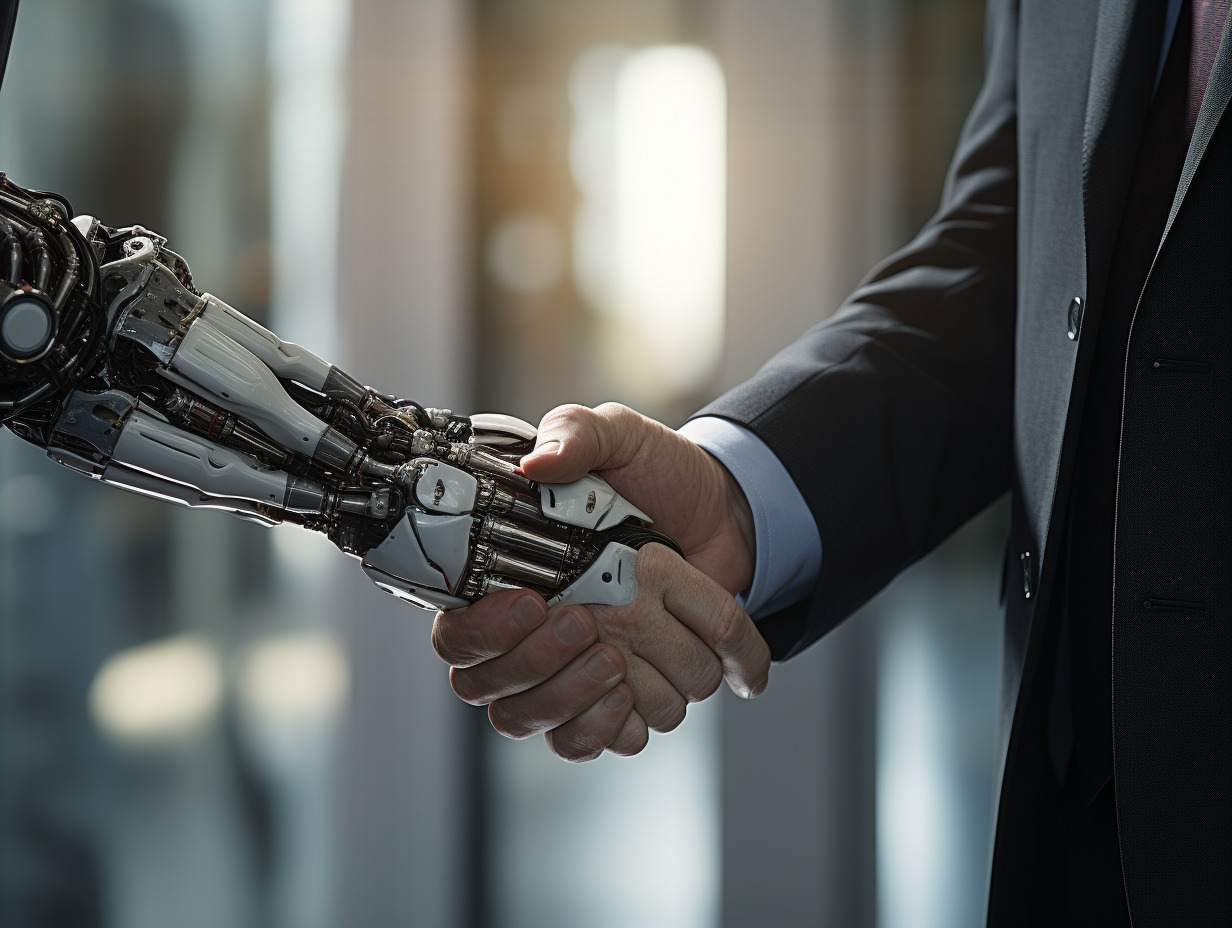
The Ethical and Practical Challenges of Integrating AI into the Economic Fabric
The ethics and governance of artificial intelligence raise profound questions within organizations. AI is not just a matter of performance and efficiency; it also touches the core of human values and how we wish to shape our future. Thinkers like Marvin Lee Minsky have long defined AI as a mirror of our own intelligences, highlighting the need for in-depth ethical reflection on its applications.
Protection against cyberattacks is another significant challenge. While AI is a formidable security tool, it can also become a weapon in the hands of cybercriminals. Companies must therefore invest in sophisticated defense systems capable of countering increasingly sophisticated attacks while ensuring the confidentiality and integrity of data.
In the human resources field, the integration of AI raises crucial questions regarding employment and training. How can companies prepare their employees to work alongside intelligent machines? Manuel Llop and other specialists agree on the importance of developing a synergy between humans and AI, with continuous training as a cornerstone.
The work of France Digitale and Sopra Steria highlights the need for adequate governance of AI. Companies must ensure that the deployment of these technologies is framed within a solid regulatory and ethical framework while being transparent about the mechanisms of automated decision-making. Mohit Joshi, a leading figure in the field, discusses the delicate balance between innovation and responsibility, encouraging leaders to adopt a bold yet thoughtful approach to AI development.