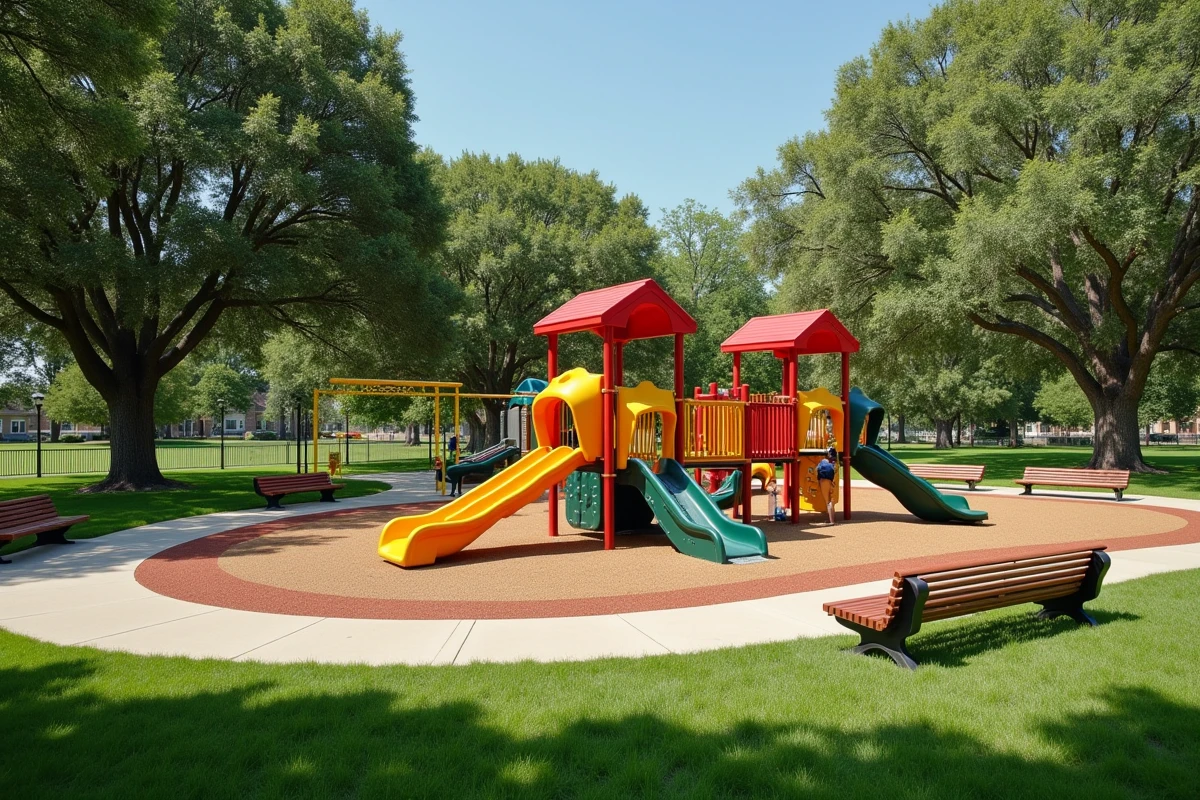
The initial compliance of a collective playground does not guarantee anything if the maintenance plan has not been considered from the design stage. Decree No. 96-1136 imposes design, installation, maintenance, and monitoring obligations on managers that extend throughout the equipment’s lifespan. We recommend treating these four aspects as a single project, not as successive phases.
Aging of playground equipment: anticipate from the specifications
A stainless steel slide or a multi-activity structure made of HPL do not age at the same rate as a polyethylene spring toy. The choice of materials directly affects the overall cost over the operational period, not just the purchase budget.
Wear parts (rotation rings, swing seats, springs) account for the majority of interventions after a few years of intensive use. Requiring the supplier to provide a written commitment on the availability of spare parts for a minimum of ten years prevents the need to replace an entire piece of equipment due to a lack of compatible components.
We observe that communities that incorporate a partial renewal plan into their initial investment budget absorb costs much better over five years. Allocating a budget specifically for replacing wear items, separate from the regular maintenance budget, helps maintain the site’s attractiveness without going through a cumbersome procurement process.
Before finalizing a project, it is useful to thoroughly document to design a playground for communities according to the rules, integrating the lifecycle question from the outset.
Preventive maintenance plan compliant with standard NF EN 1176
The NF EN 1176 standard distinguishes three levels of control: routine visual inspection, functional inspection, and main annual inspection. Each level has distinct frequency, scope, and required skill levels.
Routine visual inspection
This is done at a frequency adapted to the site’s attendance, sometimes daily for heavily used playgrounds. It focuses on obvious risks: broken elements, broken glass on the ground, vandalism, cleanliness of the shock-absorbing surface.
Functional inspection
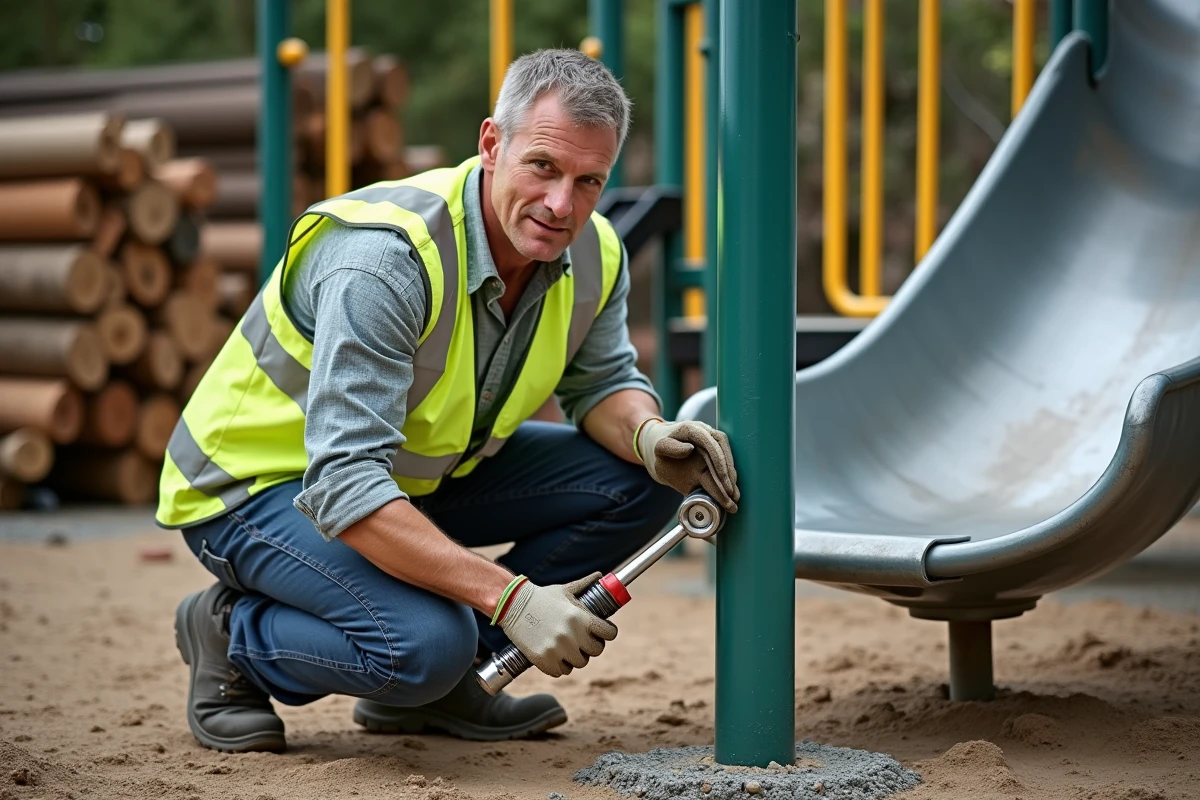
Conducted every one to three months, it checks structural stability, tightening of fasteners, wear of moving parts, and condition of foundations. A swing set with visibly worn chain links must be reported immediately, not during the next annual inspection.
Main annual inspection
This must be conducted by a competent organization (control office or qualified inspector). It produces a written report that holds the manager accountable. This report is the centerpiece of the safety file in case of disputes.
Maintaining a chronological maintenance log, accessible at all times, is not optional. It is proof that the manager is fulfilling their monitoring obligations under Decree No. 96-1136.
Shock-absorbing surfaces: performance over time and standard EN 1177
The shock-absorbing surface is the most underestimated item in terms of degradation. A soft surface poured in place or rubber tiles gradually lose their shock absorption properties due to UV exposure, freezing, and foot traffic. Compliance with standard EN 1177 must be regularly verified, not just upon project completion.
Wood chips or rolled gravel offer an economical alternative, but their fill level decreases over time. Insufficient thickness renders the surface non-compliant. We recommend planning for annual replenishment and documenting each intervention in the maintenance log.
- Poured-in-place surface: good longevity, high initial cost, localized repairs possible but technically demanding
- Rubber tiles: easy modular replacement, sensitive to lifting by frost if drainage is poorly designed
- Wood chips or gravel: low cost, but requires thickness checks several times a year and regular material replenishment
- Shock-absorbing synthetic grass: aesthetic, but the absorbent underlayer compresses and must be tested periodically
Zoning of playgrounds by age group and safety of spaces
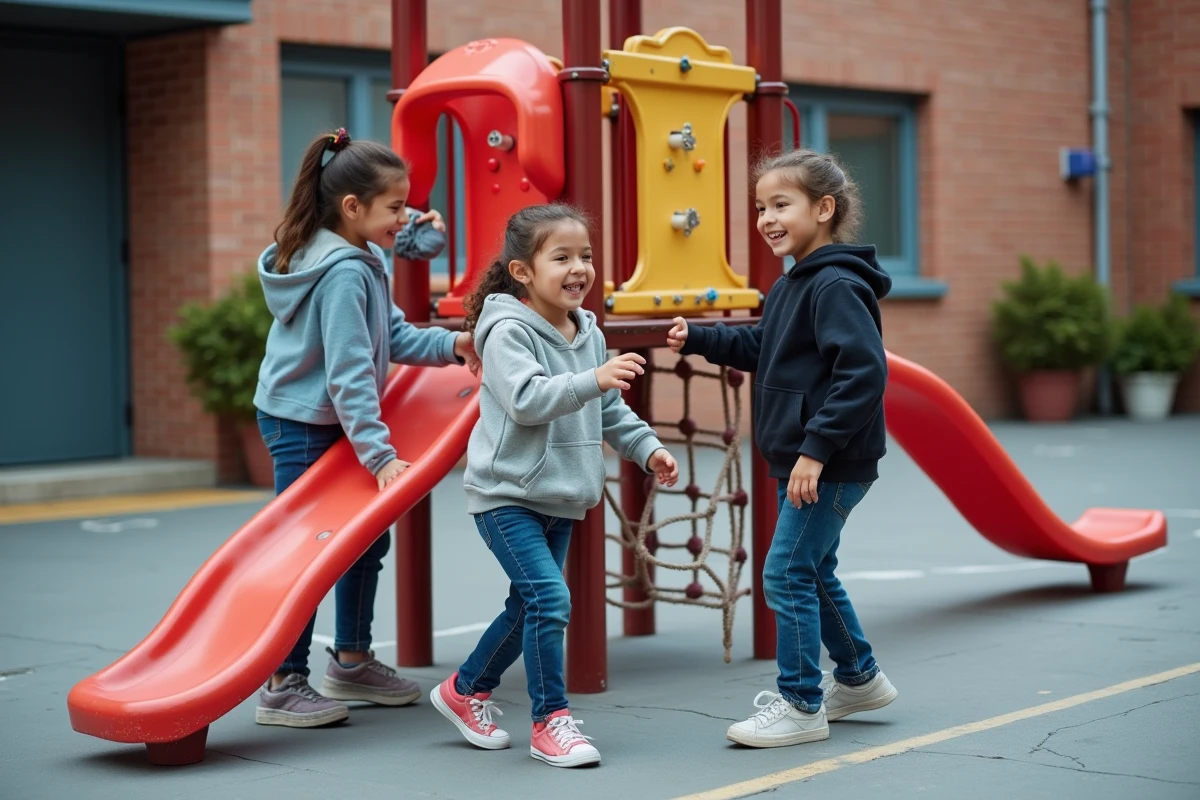
Physically separating areas designated for children under six from those designed for six to twelve-year-olds reduces the risks of collisions and misuse of equipment. The NF EN 1176 standard imposes different free fall heights and safety zones depending on the targeted age group.
Zoning is not limited to placing a sign. It involves a thoughtful placement of equipment, with sufficient buffer zones between structures. The movement zones (or fall zones) of each piece of equipment must never overlap, unless explicitly provided for by the standard for specific configurations.
- Toddler zone (two to six years): limited free fall height, ground-level access, low-speed equipment (spring toys, small slides)
- Children’s zone (six to twelve years): combined structures with climbing, sliding, and rotation, higher free fall heights requiring effective shock-absorbing surfaces
- Accompanying zone: benches positioned to provide direct visibility over both play areas, waste bins nearby
Orienting slide chutes in a direction different from the prevailing sun avoids overheating of the sliding surface in summer, a point often overlooked in layout plans.
Renewal budget and overall cost of a collective playground
The majority of communities budget the initial investment without allocating for partial renewal. After a few years, degraded equipment remains in place due to lack of funding, which tarnishes the site’s image and may engage the manager’s liability if safety is no longer ensured.
Integrating an annual budget line dedicated to the renewal of wear parts and soil checks transforms maintenance from a burden into a controlled expense. The cost of replacing a swing seat or a spring is marginal compared to the complete replacement of obsolete equipment.
A final often overlooked point: signage. Information panels (age ranges, emergency number, identification of the manager) also degrade. Their readability is part of regulatory obligations and must be checked during each routine inspection.