Donkey milk in Egypt, olive oil in Greece, turmeric in India: ancestral beauty rituals rely on ingredients that modern cosmetology today subjects to strict evaluation protocols. Which active ingredients withstand scientific scrutiny, and which are more narrative than evidence? Comparing these millennia-old practices through their components, uses, and current validation allows us to distinguish the genuinely useful heritage from mere marketing claims.
Key Ingredients of Ancestral Beauty Rituals: A Comparison by Civilization
Each major civilization developed its own treatments using local resources. The table below groups the main active ingredients associated with beauty rituals from four cultural areas, specifying historical use and contemporary validation levels.
| Civilization | Main Ingredient | Traditional Use | Documented Properties |
|---|---|---|---|
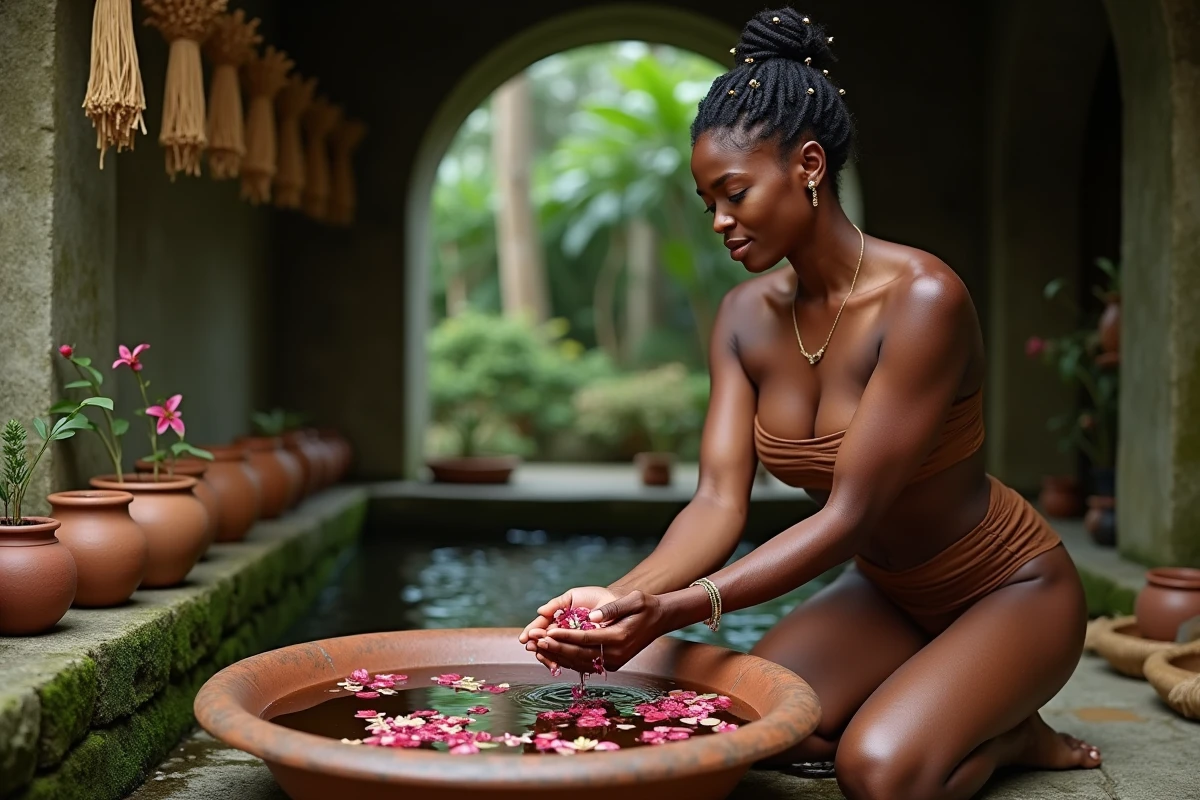
| Ancient Egypt | Donkey milk, honey | Moisturizing baths, skin masks | Exfoliating lactic acid, humectant properties of honey |
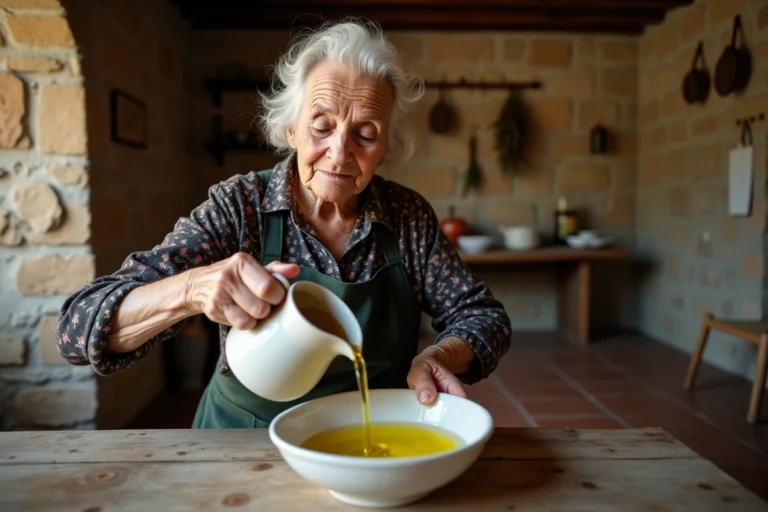
| Ancient Greece | Olive oil | Body anointing after bathing | Antioxidants (polyphenols), emollient function |
| India (Ayurveda) | Turmeric, vegetable oils | Bridal masks, therapeutic massages | Anti-inflammatory (curcumin), skin hydration |
| Maghreb | Clay (ghassoul), black soap | Scrubbing in the hammam, skin purification | Adsorption of impurities, gentle mechanical exfoliation |
What stands out from this comparison is the convergence of approaches: almost all these civilizations associated a fatty body with an exfoliating or purifying agent. The oil-clay duo in the Maghreb operates on the same principle as the olive oil-pumice duo in Greece.
The most documented rituals today are those from the Mediterranean region and Ayurvedic India, for a simple reason: their base ingredients (olive oil, honey, turmeric) have been the subject of in vitro studies confirming certain antioxidant and anti-inflammatory properties.
Resources compile these practices and their mythological origins, as can be read on the Blog Beauté site, which traces the gestures attributed to divine figures of Antiquity.
Antioxidant and Anti-inflammatory Properties: What Dermocosmetics Confirm or Refute
The scientific validation of these ancestral beauty rituals does not follow a uniform line. Effectiveness depends on concentration, galenic form, and stability of extracts, three parameters that traditional uses did not control.
Turmeric illustrates this gap well. Curcumin has recognized anti-inflammatory properties in the laboratory. However, when applied as a raw paste on the skin (as in Indian bridal rituals), its skin bioavailability remains low without an appropriate vector. The traditional gesture provides mechanical exfoliation and a temporary glow effect, not the deep anti-inflammatory action that literature attributes to the isolated molecule.
Honey presents a different profile. Its humectant and slightly antibacterial properties work even in raw form, which explains its longevity as a skincare ingredient. Honey is one of the few ancestral actives whose traditional use corresponds to validated use.
Olive oil, a pillar of the Greek ritual, contains antioxidant polyphenols. Its direct application on the skin nourishes and protects the skin barrier. In contrast, the spectacular anti-aging promises sometimes associated with these oils in marketing discourse do not find solid confirmation in recent dermocosmetic reviews.
Clays and Black Soap: Mechanical Rather Than Chemical Efficacy
Moroccan ghassoul and black soap work through adsorption and friction. Their mechanism is physical: the clay captures surface impurities without chemical interaction with the skin. This mode of action is simple, reproducible, and does not depend on a precise concentration.
That is why the hammam remains one of the most translatable ancestral rituals today. The kessa glove combined with black soap reproduces a mechanical exfoliation whose benefits (removal of dead cells, stimulation of microcirculation) are undisputed in dermatology.
“Ancestral Ritual” Claims in Cosmetics: The European Regulatory Framework
The commercial success of references to goddesses and ancient secrets has prompted European lawmakers to regulate these discourses. Regulation 655/2013 and its guidelines require brands to adhere to criteria of fairness and truthfulness when using terms like “ancestral,” “traditional,” or “inspired by.”
In practice, a product claiming to be a “secret of an Egyptian goddess” must be able to document at least a continuity of traditional use or evidence-based data on the highlighted ingredient. Purely evocative claims with no demonstrable link to a historical practice are theoretically non-compliant.
- The mention “inspired by Cleopatra’s ritual” requires traceability of the ingredient (donkey milk, for example) and its documented historical use.
- A product containing turmeric cannot claim the properties of pure curcumin if its formulation does not guarantee a sufficient active concentration.
- The terms “energy,” “light,” or “goddess,” common in beauty marketing, remain permitted as long as they do not constitute a measurable performance claim.
Translatable Beauty Rituals for Daily Use: Which Gestures to Keep
Not all ancestral rituals hold value once removed from their original context. Some gestures endure through the centuries because their mechanism of action is robust, independent of formulation or technology.
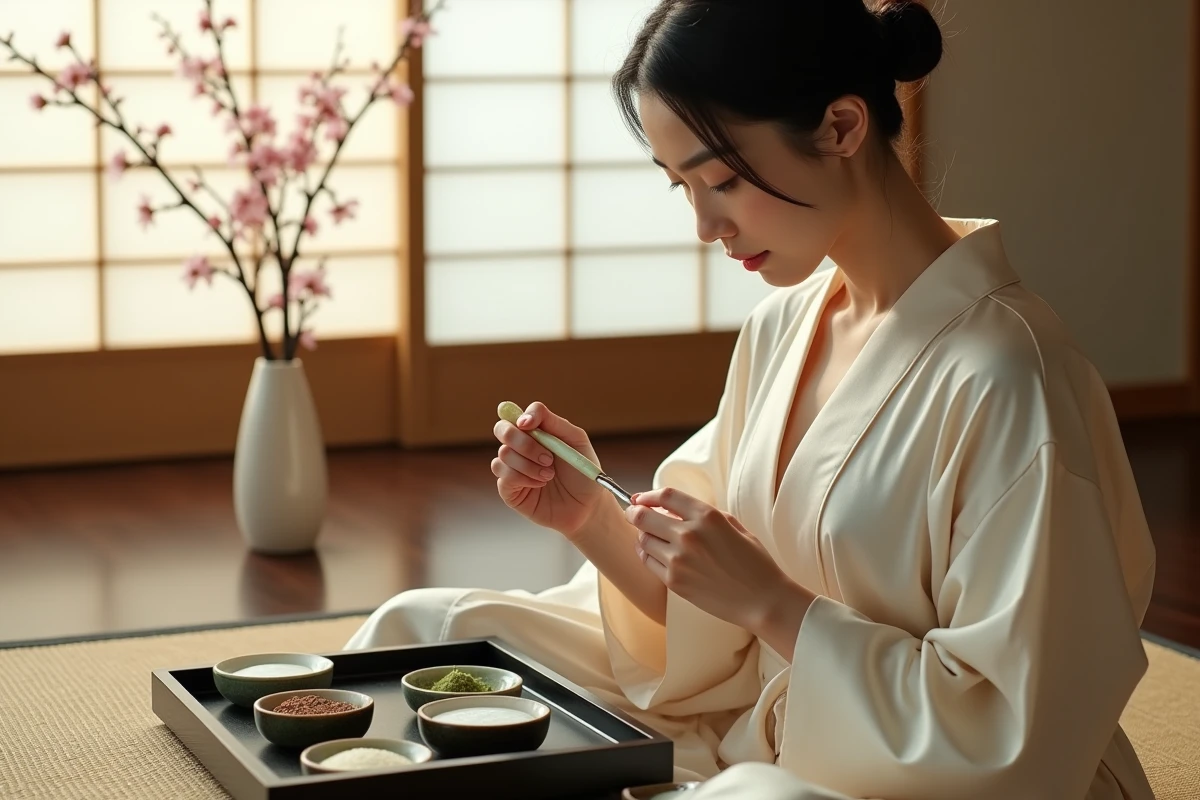
- The Japanese double cleansing (oil then foam) effectively removes lipophilic and then hydrophilic residues, a principle that modern cosmetology has simply renamed.
- Mechanical exfoliation with a kessa glove or pumice stone remains relevant for cellular renewal, provided it does not irritate sensitive skin.
- Applying a vegetable oil (olive, argan, babassu) after bathing replicates the Greek anointing gesture and maintains skin hydration through occlusion.
- Raw honey masks retain their relevance for dry skin due to their humectant power.
Conversely, donkey milk baths or masks made from crushed gemstones are more symbolic rituals than measurable skincare. Their value is cultural and sensory, not dermatological.
The most enduring ancestral gestures are those whose mechanism is simple, whether physical or chemical: exfoliating, nourishing, protecting the skin barrier. Promises related to “energies” or “lunar cycles,” often associated with goddess figures, belong to another realm, that of subjective well-being, which has its own legitimacy but does not fall under cosmetology.