A child decodes an instruction as early as 18 months, but true emotional dialogue takes root much later, around 4 years old. Traditional educational methods, applied to the letter, struggle to keep pace with this unique growth rhythm.
What shapes coherence in parental support is not the punishment that falls at the moment, but patient repetition and consistency. Yet, many adults underestimate the power of rephrasing and the impact of positive reinforcement over the days.
Why children’s flourishing begins with a climate of trust at home
Building a secure environment is not superfluous. It is the foundation that allows the child to feel solid enough to move forward. Catherine Dolto reminds us: emotional security paves the way for autonomy and stimulates the desire to explore. The child needs to know, unequivocally, that their voice will matter, that it will be taken seriously. This active listening manifests in the simplest gestures of everyday life: an attentive look, a measured response, a reassuring word. Nothing spectacular, but every detail shapes trust.
Kindness, far from any obsession with success, gives the child the space to dare, to make mistakes, to try again. Taking the time to acknowledge their emotions, to accept their rhythms, aligns with François de Singly’s analyses: the family is a place of personal affirmation. Highlighting an effort, welcoming a concern, naming a anger—these are gestures that nourish self-esteem slowly but surely.
To move in this direction, a few levers make a difference:
- Adopt an open communication style, where everyone can express themselves without fear of being judged.
- Encourage free play, this experimental ground that allows the child to discover themselves.
- Take care of family transmission: rituals, memories, stories told, everything that weaves the thread between generations.
Positive parenting charts a path of balance, as highlighted by parentsetmomes.fr with its project “Parents and Kids – Together, Every Day.” Supporting a child is much more than aligning recommendations: it is a daily commitment, sometimes silent, often invisible, but always decisive. The child flourishes when this climate of listening and respect is established, values championed by Catherine Mathelin-Vanier and attachment specialists.
What concrete guidelines to encourage autonomy and cooperation in daily life?
Promoting autonomy is not just about broadening the field of possibilities. It is about offering the opportunity to learn at their own pace, to confront experiences designed for the child’s age and personality. One thinks of the Montessori method: a child-height space, chosen activities, an environment where every detail makes sense. Dressing independently, selecting an activity—these are small steps that build confidence and a sense of competence.
In this perspective, allow for free movement and free play: enabling the child to discover, test, and imagine without immediate intervention. These moments form the foundation of holistic development and gently strengthen self-esteem. Even routines are learning grounds: preparing meals together, tidying up, organizing the day. The child gradually appropriates the codes of the collective, without pressure or rigidity.
To concretely guide this dynamic, certain guidelines are essential:
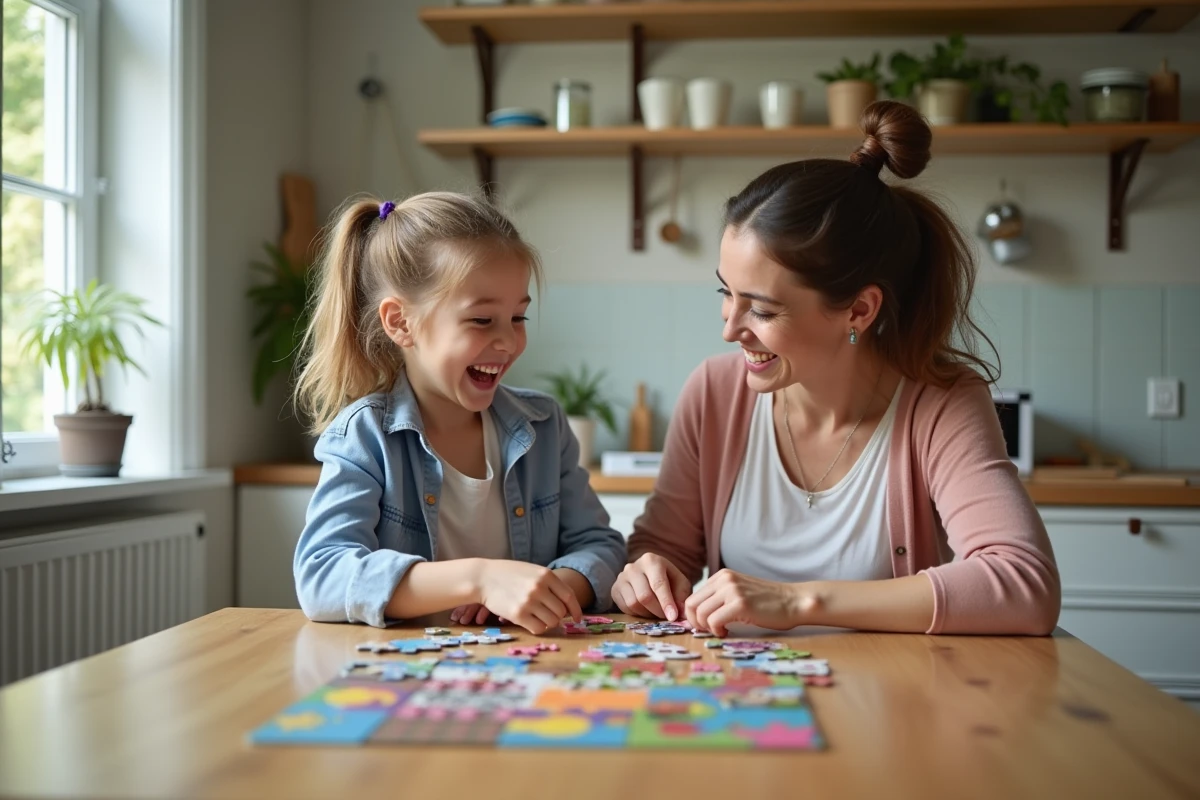
- Offer educational games: puzzles, constructions, challenges to tackle together.
- Focus on cooperation, through collective activities where listening and helping each other are expressed, far from a competitive spirit.
- Take into account hypersensitivity or shyness, adapting your support to encourage every step forward.
The regulation of screen use remains a guideline not to be overlooked. Set limits, discuss content, involve the child in organizing screen time. For the more sensitive or reserved, highlight strengths and support the expression of emotions. These are gestures that, day after day, shape a positive education mindful of the balance between independence and belonging to the group.

Simple tips to cultivate joy and strengthen family bonds every day
To nurture shared joy, there is no need to seek complex formulas. A meal taken together, away from the tumult of screens, can be enough to reinforce bonds. Prioritize active listening: let the child tell their story, express what drives or hinders them, without rushing the discussion or interrupting. This availability nourishes self-esteem and emotional security, cornerstones of the child’s flourishing.
Every day, establish a ritual accessible to all: a walk, a game, a story read before bed. These regular moments frame family time and soothe what could flare up. Involve the child in household choices: deciding on the menu, organizing a weekend, participating in collective life—all this helps them feel like an active participant.
Here are gestures to adopt to maintain complicity and joy within the home:
- Offer suitable educational games, ideal supports for exchange and learning.
- Share creative or manual activities, sources of imagination and shared memories.
- Allow the child to express their emotions, whether joyful, intense, or upset, in words or drawings.
Positive psychology encourages valuing every effort along the way, however modest, rather than focusing solely on success. Make recognition and gratitude daily reflexes. It is in these exchanges, in this presence, that attentive parenting is built and that each child finds the space to fully flourish. Ultimately, it is these small repeated gestures that leave the most lasting marks in family memories.